Why Goa Is Emerging as India’s Next Creative Entrepreneur Hu...
Over the years, Goa has been known as one of India's most sought-after holiday destinations, famous...


There’s something quietly compelling about Bomra’s. It doesn’t announce itself with fanfare or lean heavily into the usual coastal-restaurant clichés. Instead, it does something far more memorable—it surprises you slowly. One plate at a time. One herb at a time. One layered, meticulously crafted dish at a time.
Situated in the tranquil lanes of Anjuna, Bomra’s is the kind of restaurant that doesn’t immediately tell you what to expect. It doesn’t follow the pattern of typical “Asian fusion” places, nor does it confine itself to rigid definitions of Burmese or Southeast Asian food. What it offers instead is a highly personal, sharply curated expression of flavours rooted in Burma, informed by chef Bomra Jap’s heritage, and translated thoughtfully through fresh, local Goan ingredients.
The USP here is clarity. Flavour without gimmick. Detail without drama. And a setting that complements the food without overwhelming it. For anyone looking to eat in Goa not just for ambience or novelty, but for thoughtful, expressive cooking—Bomra’s holds its own space.
At the centre of Bomra’s is chef Bomra Jap himself. With roots in Burma and years of experience working across kitchens that honour precision, his approach is defined by balance. Not the kind you read about on tasting menus, but balance that you can taste on a warm spoonful of fermented tea leaf salad, or in a deceptively simple dish of grilled pork that hits just the right note of smoke, salt, and tang.
What makes Bomra’s unique is how the chef doesn’t showcase technique for the sake of it. Every element on the plate has a purpose. Salads are layered but never busy. Curries carry heat but also lightness. Meat and seafood aren’t coated in unnecessary gravies or predictable sauces. Instead, they are left to speak for themselves—elevated, not masked.
This isn’t food meant for scrolling or hashtags. It’s food that comes alive in conversation, in quiet observation, in how you sit back after a bite and realise something unexpected just unfolded on your palate.
The dishes at Bomra’s don’t come from a fixed region. They’re Burmese in spirit, but they pick up Thai acidity, Vietnamese lightness, and Indian seasonal rhythm. What ties it all together is the way the kitchen works with contrast.
You’ll often find citrus cutting through fatty fish. Or a burst of fresh herbs tempering roasted peanuts. A raw papaya salad might carry the crunch of toasted sesame but also the gentle sharpness of green chilli. Pork belly, slow-cooked until melting, might be paired with something as unexpected as fermented mustard greens or a tart chutney built around bimbli or raw mango.
The restaurant doesn’t crowd the plate. Every bite feels composed, yet never overly arranged. And that restraint is what gives the food its strength. It’s not trying to be clever—it just is.
A significant part of Bomra’s appeal is how naturally it integrates fresh, seasonal produce into its dishes. The menu, while consistent in structure, adjusts to what’s available and at its peak. Fish is chosen based on the catch that morning, not a standing order. Herbs are used in their freshest form—not dried, not powdered, not synthetic.
This makes the eating experience feel alive. A tomato salad in January tastes different from one in May. The snapper grilled one evening might give way to red snapper, mackerel, or even pomfret depending on the sea’s generosity. But what stays constant is the treatment—precise, minimal, confident.
There’s also an intelligent use of acidity throughout the menu. Lime, tamarind, vinegar, even pickled elements—all show up where needed to lift a dish, never to overpower it. It’s the kind of kitchen where every spoonful feels intentional.
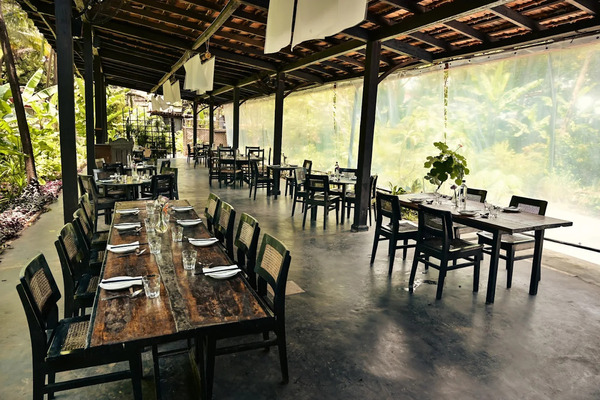
Bomra’s is housed in a quiet, tree-lined corner of Anjuna. The restaurant spills into a garden with seating arranged loosely beneath open skies and soft lighting. There’s no blaring music, no themed décor, no performative furniture. The layout gives you space—to listen, to eat, and to unwind.
Tables are spaced with the kind of thought that allows both privacy and ambient conversation. The service matches the setting—polished but relaxed, attentive but never hovering. The team is informed about the menu but doesn’t overwhelm you with suggestions. You’re allowed to explore, to be curious, to ask, or to simply order what you like and let the food do the talking.
For many, the setting becomes as much a part of the experience as the menu. It’s not loud. It’s not rushed. It allows for stillness—something that feels increasingly rare in the Goa restaurant scene, where high energy often replaces thoughtful dining.
If there’s one thing you’ll be nudged toward at Bomra’s, it’s the salads. And rightly so. This is where the chef’s understanding of layering, texture, and contrast shines most clearly.
The Tea Leaf Salad is a standout—fermented tea leaves paired with nuts, legumes, sesame, and shredded cabbage. It’s crunchy, earthy, slightly bitter, and totally satisfying. Other options rotate—green mango, raw papaya, cherry tomatoes, pomelo—each with a balance of umami, acidity, and freshness that never tires the palate.
Salads here don’t serve as sides or appetisers. They set the rhythm for the meal. They open up the palate. They tell you exactly what kind of kitchen you’re stepping into.
Where many places in Goa are leaning into over-dressed meats or theatrics around seafood, Bomra’s holds back. Grilled fish is presented with minimal flair but maximum impact. Marinades are kept light—allowing the sear, char, and protein quality to carry the weight.
The Pork Belly is tender with a whisper of sweetness, balanced out by sour chutneys or fresh greens. The Lamb Curry, when available, carries richness without heaviness—slow-simmered but never greasy. Even the vegetarian options like stir-fried beans, eggplant in tamarind sauce, or tofu with sesame and greens deliver deep, satisfying flavours without being overly constructed.
What ties these dishes together is a sense of flow. You never feel like one dish overpowers the next. Everything is built to coexist.
Bomra’s drink menu is not overly extensive, but it’s sharply curated. Cocktails echo the food’s herbaceous, citrus-forward themes—often infused with lemongrass, kaffir lime, or ginger. Wines are selected to pair with the sharper, more acidic notes in the menu, and local craft beers round off a simple but effective beverage offering.
Non-alcoholic options include iced teas, house-sodas with subtle spices, and refreshing twists on tropical juices—all offering an alternative to sugary mixes and canned sweetness.
Everything you sip feels connected to what’s on your plate, which is rare—and intentional.
Bomra’s doesn’t chase trends. It isn’t about the next big thing or viral ingredient. What it offers is consistency—across time, across seasons, and across repeat visits. It’s a place for those who enjoy eating not just for taste but for texture, pacing, and the layers that build in silence.
There’s a calm confidence in the way the restaurant operates. It doesn’t need spectacle. It doesn’t rely on views. It builds its strength dish by dish, trusting that the right people will notice.
Premium quality services for all customers.
Committed to delivering the best experience with professional standards.
Specialized professionals with years of experience in the industry.
Personalized approach tailored to individual needs and preferences.
At Bomras, we are committed to providing exceptional service and value to all our customers. We strive to create a positive experience that exceeds expectations and builds lasting relationships within the community.

Over the years, Goa has been known as one of India's most sought-after holiday destinations, famous...

Not All Dental Problems Can Be Solved by a General Dentist. It’s been generally presumed that every...

It’s 2:07 AM. You’re lying in bed, trying to will yourself to sleep as a way to ignore the ache eman...